
What Is a Blockchain? Explained for People Who Have Never Traded
If you've never bought crypto, the word blockchain sounds technical. It isn't. It's a way of keeping shared books: a record that lots of people can see and that, once written, is very hard to alter.
In this guide we explain what it is, how a transfer moves, and why understanding the network saves you from the most expensive beginner mistake. Then we show how all of this connects to the 7 chains on X4T.
What is a blockchain?
A blockchain is a digital ledger that is public and replicated across thousands of computers. Instead of a single bank keeping your entries, the whole network stores the same history and agrees on it using clear rules.
The word breaks down like this:
- Block = a batch of transactions closed together
- Chain = each batch is hooked onto the previous one
If someone tries to change an old line, that block's digital fingerprint no longer matches the next one. The rest of the network notices.
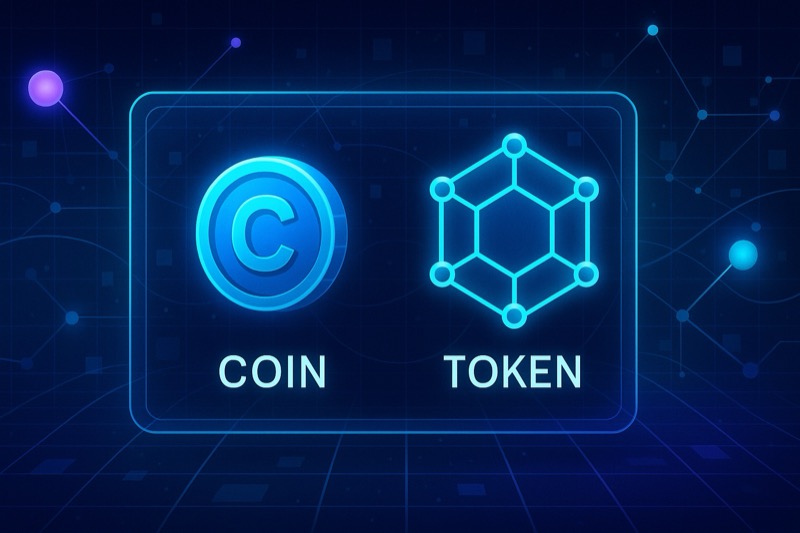
It's not an app, not a company, and not "crypto" itself. Bitcoin, Ethereum, or USDT live on a blockchain, the same way your balance lives in a ledger. The chain is the notebook. The coin is what gets written in it.
Key facts about a blockchain
- What it records: transfers, balances and, on some networks, programs (smart contracts)
- Who stores it: thousands of nodes, not a branch office
- How it's chained: every block carries the fingerprint (hash) of the previous one
- How the next block is agreed on: consensus (Proof of Work or Proof of Stake, depending on the network)
- What it doesn't have: an "undo" button once a transaction is confirmed
The most useful analogy: a notebook nobody can secretly erase
Picture a notebook of debts in a neighborhood.
- Ana lends Luis 100,000 guaraníes.
- They write it down: date, who, how much.
- The notebook isn't kept by one person. There are copies in several corner shops.
- When there's a new entry, everyone updates their copy.
- If someone crosses out a line or invents a loan, the others compare and say: "that doesn't match."
That distributed notebook is, in essence, a blockchain.
| Traditional bank | Blockchain |
|---|---|
| The bank keeps the ledger | Many computers keep the same ledger |
| You trust the institution | You trust the rules of the network |
| An entry can be corrected "from the inside" | A confirmed entry is almost impossible to move |
| Opening hours, branch, middleman | The network runs 24 hours a day |
What problem did it solve?
Digital money had an obvious problem: if it's a file, who stops you from copying it twice?
That's called double spending. With a physical banknote you can't pay twice with the same bill. With a file you can, unless someone central keeps the count: a bank, a fintech, PayPal.
Bitcoin, in 2009, solved that without a single owner of the ledger:
- Everyone sees the same transaction history
- The rules say how a new block gets added
- There's a cost (work or stake) to propose that block
- The network picks the version that follows the rules
The result: you can send value to a stranger without asking a bank for permission. That doesn't mean "no risks." It means trust moves from the bank counter to the rules.
How a transfer moves, step by step
Think of it as a wire transfer, but without SIPAP or SWIFT.
- You have an address. It's your "account number" on that network. It isn't your name; it's a code.
- You create a transfer. "Send X to this address."
- You sign with your key. The signature proves that you authorized it (or the platform that holds custody for you).
- The network hears it. Thousands of nodes receive the request.
- It goes into a block. It's grouped with other transfers.
- More blocks get confirmed on top. Each one makes it harder to reverse the one before.
- You can see it in an explorer. A public website shows the transaction's hash.
When crypto people say "wait for confirmations," that's what they mean: how many blocks have been stacked on top of yours. On Bitcoin you're usually asked to wait longer. On fast networks (Solana, Tron, some Layer 2s) seconds or a few minutes are enough.
Three terms you'll hear all the time
Node
A computer that stores (all or part of) the chain and verifies the rules. You don't need to run a node to use crypto, just like you don't need to be the central bank to hold an account in guaraníes.
Consensus
The method the network uses to agree on the next valid block.
- Proof of Work: computing energy is spent. This is Bitcoin's model.
- Proof of Stake: coins are locked up as collateral. This is the model used by Ethereum and several modern networks.
Someone proposes the block. The rest can reject it if it breaks the rules.
Native coin and network fee
Every chain has (almost always) a coin used to pay for using the network:
- Bitcoin → paid in BTC
- Ethereum → gas is paid in ETH
- Solana → SOL
- Tron → TRX (or energy / bandwidth)
- BNB Chain → BNB
That payment is not the exchange's commission. It's the highway toll. That's why you sometimes see "network fee" and "platform fee" as two separate lines.
There isn't just one blockchain
This matters more than it seems when you trade for the first time.
There are many chains, just like there are many payment systems. They are not the same notebook.
On X4T you trade across 7 networks:
- Bitcoin — the original, designed as resilient money
- Ethereum — smart contracts; thousands of tokens live on top of it
- BNB Chain (BSC) — fast and cheap; often the network used to cash out to fiat
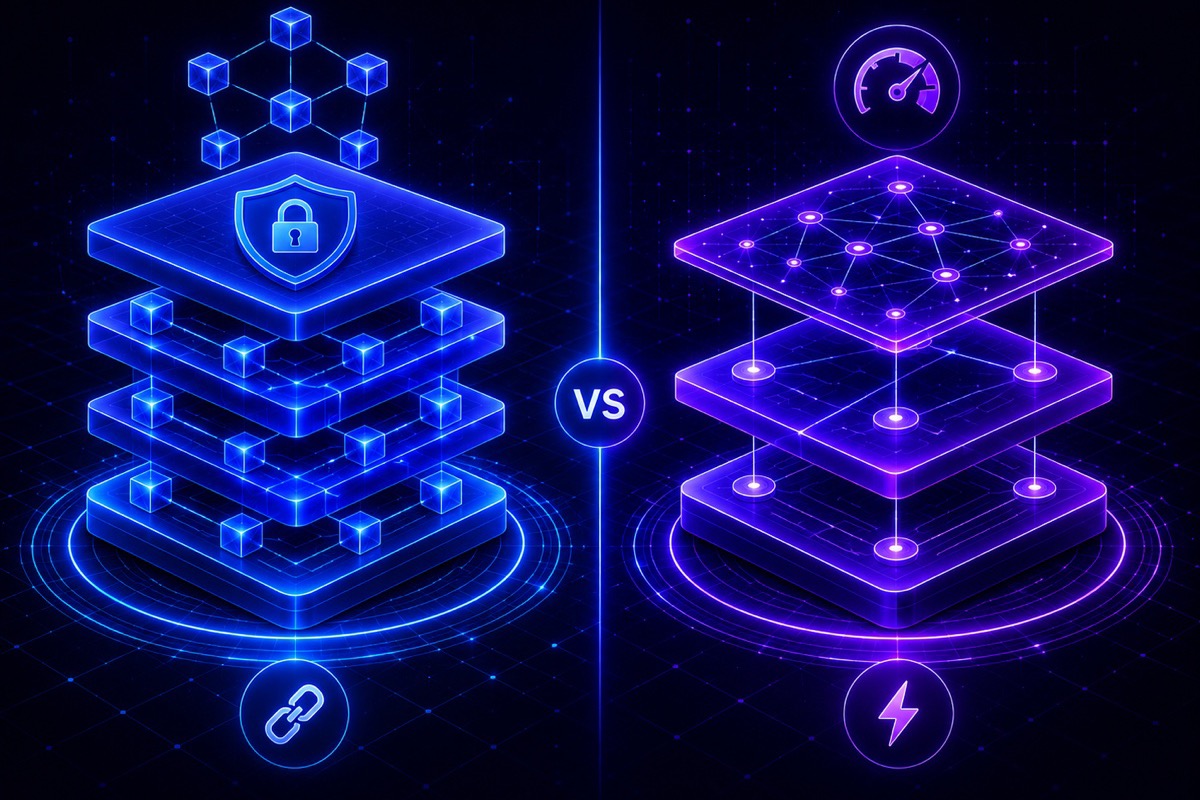
- Polygon and Arbitrum — Ethereum's "upper floors": same family, lower cost
- Solana — very fast, low fees, a different design
- Tron — the LatAm favorite for moving USDT cheaply
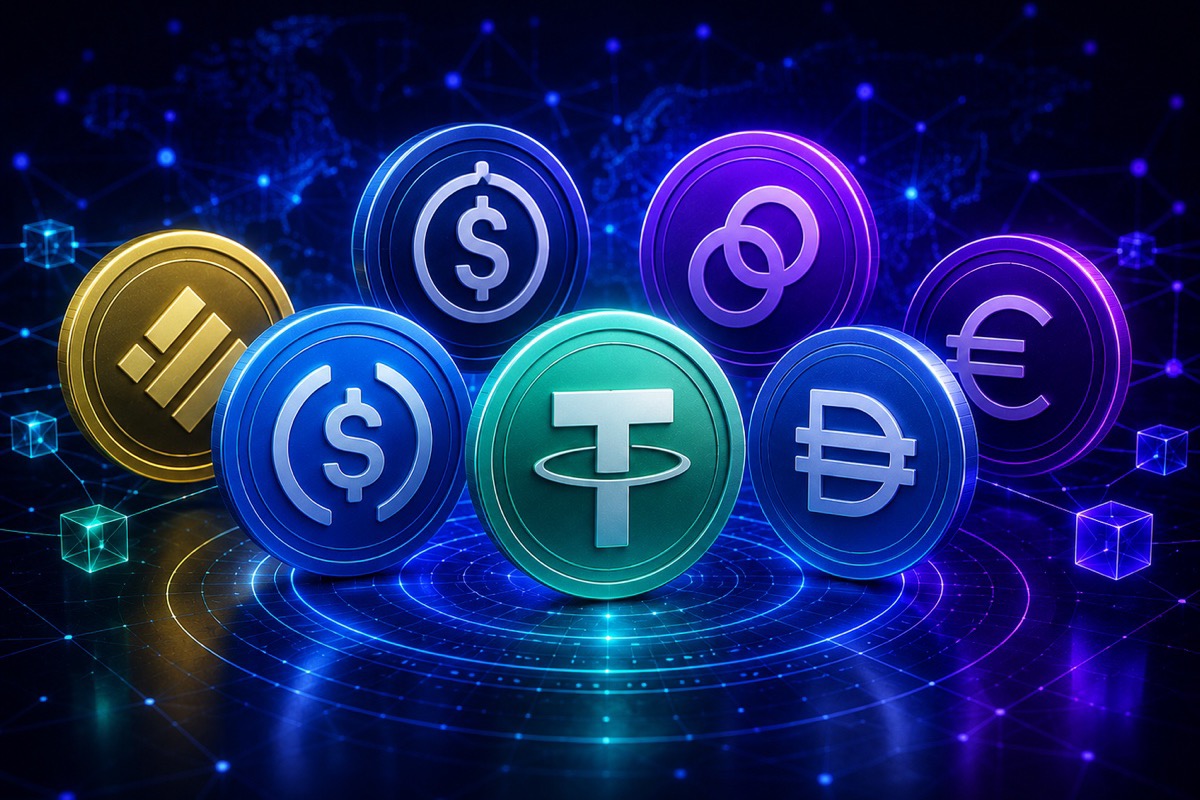
USDT on Tron is not the same box as USDT on Ethereum. The name looks alike; the network doesn't. Sending a token over the wrong chain is the most common beginner mistake. The blockchain doesn't guess that you meant another network. It records exactly what you signed.
The right question isn't just "do I have USDT?" It's "USDT on which network?"
What it is and what it isn't
It is
- A shared record of transactions
- A way to coordinate strangers without a single boss
- The foundation of Bitcoin, Ethereum, and almost all the crypto you'll see on an exchange
It isn't
- A synonym for "cryptocurrency." Crypto lives on the chain
- Total anonymity. It's pseudonymous: the address is visible, not your ID. If that address gets linked to your identity (a KYC exchange, a payment), the trail exists
- A guarantee of profit. The chain records. The market sets the price
- A system with an undo button. A confirmed transfer can't be cancelled like a bank transfer
Blockchain on X4T: what does it mean for you?
On X4T you don't need to install a node or store a seed phrase to get started. You trade on the real chains from a single account, with institutional custody.
Benefits of understanding blockchain (and using it on X4T)
Real multichain Native Bitcoin, Ethereum, Solana, BNB Chain, Arbitrum, Polygon, and Tron, all in one place.
The network is clearly visible Before you deposit or withdraw, the platform shows you the chain for that transaction. Picking the wrong network can cost you your funds.
Institutional custody Your assets are protected by Fireblocks' MPC technology. The rule of the chain still applies: a withdrawal to a wrong address or network can't be reversed.
Network fee vs. platform fee Trading on X4T doesn't remove each blockchain's toll. It does let you move between networks and, on EVM chains, benefit from a gas subsidy under the current MultiChain conditions.
On-ramp and off-ramp in Paraguay Convert guaraníes or dollars and trade on real chains, with a VASP license granted by SEPRELAD.
Compliance and transparency A partnership with Chainalysis and on-chain operations: every movement leaves a verifiable trail.
How to take your first step on X4T
Getting started is very simple. The healthy order goes from lower to higher risk:
- Sign up on X4T and complete your verification
- Deposit a small amount in guaraníes, dollars, or crypto
- Pick the network if you're sending or receiving from outside (TRC-20, BEP-20, ERC-20, Solana, native Bitcoin)
- Make a first trade (for example, buy USDT or BTC)
- Check the movement in your account before raising the amount
- Only then send or withdraw larger amounts
X4T provides tools and information, but it is not a financial advisor. You authorize every transfer yourself.
Frequently asked questions
Are blockchain and Bitcoin the same thing?
No. Bitcoin is the first blockchain that worked at scale, and the coin that lives on that network. Many other chains came afterwards (Ethereum, Solana, Tron, BNB Chain) with different rules and uses.
What is a hash?
It's the digital fingerprint of a piece of data. The same text always gives the same fingerprint. Change a single number and the fingerprint is different. That's why it's hard to fake an old block without anyone noticing.
What is a smart contract?
On networks like Ethereum, a program that lives on the chain and runs the same way for everyone: "if A happens, do B." It's not a notarized contract, and it isn't "smart." It's public code. You don't need to use one to buy your first Bitcoin.
Why does a transfer sometimes take a while to show up?
Because the network is closing the entry: your transaction goes into a block, and confirmations need to stack up on top of it. Every chain has different timings.
Why does picking the network matter so much?
Because they aren't the same ledger. If you send USDT over Tron and the recipient expects Ethereum, the funds can be lost. On X4T the network for every deposit and withdrawal is shown explicitly to prevent that mistake.
Do I need a seed phrase to use blockchain on X4T?
Not to trade inside the platform. X4T uses institutional custody with Fireblocks (MPC), with no seed phrase. If you ever withdraw to an external wallet, that wallet may ask you to look after its own key or seed.
Conclusion: one public notebook, many networks, a single account
A blockchain is not a fad or an app. It's a public notebook that many people replicate and that is very costly to rewrite.
Bitcoin was the first version that worked at scale. Then came chains that were faster, cheaper, or more programmable. They all share the same idea: recording value without asking a single owner of the ledger for permission.
Understanding that is what lets you read the rest of X4T's educational series — stablecoins, Layer 1 and Layer 2, Tron, bridges, Limit Orders — without getting lost.
The X4T advantage for beginners
- 7 real networks in a single account, not a simulator
- The network is visible on deposits and withdrawals, so you don't mix up rails
- Institutional custody with Fireblocks, no seed phrase
- Local on-ramp and off-ramp in guaraníes and dollars
- Regulated platform with a VASP license in Paraguay
- Educational material to trade with the right network, not just the right ticker
A shared ledger with no single owner. That's a blockchain, and it's the foundation of everything you trade on X4T.
Ready to take the first step on the right network? Sign up on X4T and start small, backed by Paraguay's leading hybrid exchange.
Learn blockchain. Trade on X4T — Your Gateway to Digital Money.